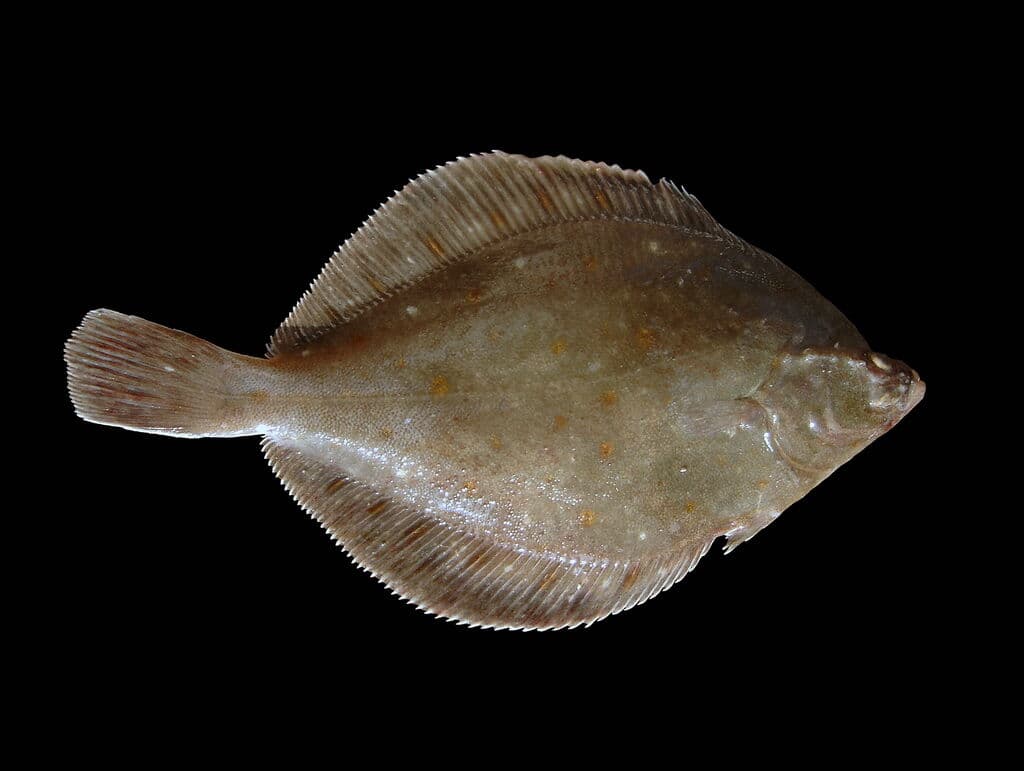
Photo: Hans Hillewaert, Wikimedia Commons (CC BY-SA 4.0)
Pleuronectes platessa
Clean sand and shellfish banks; estuary mouths and inshore drifts in 20-60 ft.
Drifted flowing traces with ragworm, squid strip and plenty of beads and attractors.
There is no mistaking a plaice: chocolate-brown above, porcelain-white below, and scattered with vivid orange spots, lying camouflaged on clean sand with both eyes periscoped upward. It is the flatfish that built entire ports - and the first "proper" fish for generations of small-boat anglers.
Spring is plaice time. From March the fish move onto inshore sandbanks to feed hard after spawning, and famous marks like the Skerries off Dartmouth see flotillas of boats drifting for them. They feed by sight, which is why plaice rigs jangle with beads and spoons like seaside jewellery.
A long, slow drift with a ragworm-and-squid cocktail trundled along the bottom is the classic approach. Plaice bite delicately and deserve patience - give them time to take the bait properly. On the table they need no introduction at all.
The UK boat record is just over 10 lb; a 4 lb fish is a specimen anywhere.
None of our skippers are targeting plaice at the moment - but there is always something biting. Browse what is running and catch something else.